
Enclosed bulletin boards solve the problem of protecting posted information from tampering, weather, and damage in public buildings where notices must stay visible and intact. Courthouses, government offices, schools, libraries, and transit facilities use enclosed boards to display official notices, schedules, and announcements securely.
The United States has more than 9,000 public library systems (Institute of Museum and Library Services).
What is an enclosed bulletin board?
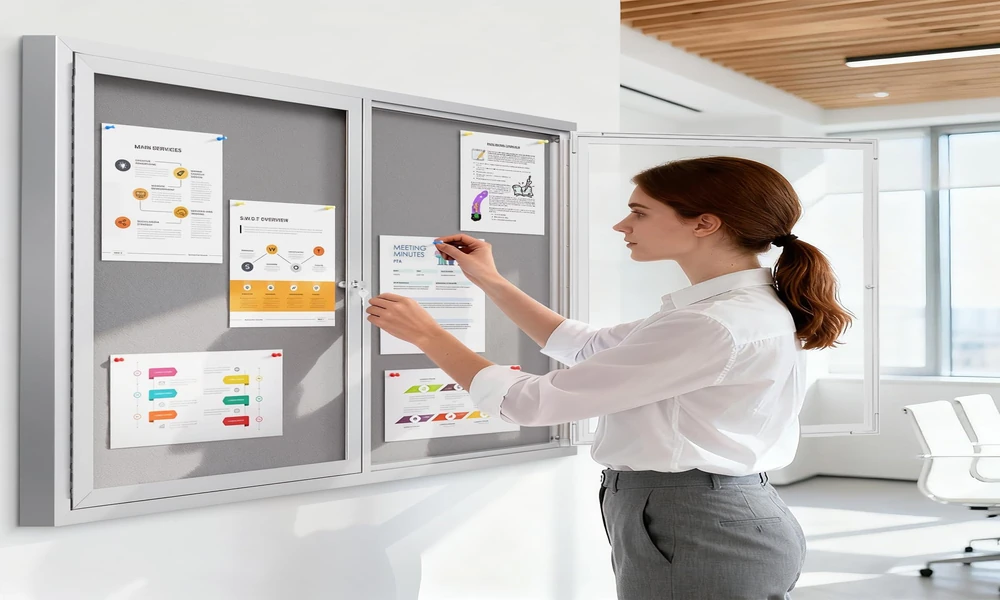
An enclosed bulletin board is a tackboard mounted inside a cabinet with a glass or acrylic door that can be locked. Posted materials remain visible through the door but are protected from removal, vandalism, and handling.
Door and surface options
Enclosed boards come with hinged or sliding doors in a variety of sizes. Tackboard surfaces inside the cabinet may be cork, vinyl, fabric, or other options, and some units include interior lighting for visibility.
Which enclosure styles are offered
Enclosed bulletin boards are offered in 2 door styles, sliding glass and hinged, with a choice of tackboard surfaces behind the doors (ASI Visual Display Products).
Why do public buildings need secured displays?
Public buildings need secured displays because official notices, legal postings, and public information must remain intact and unaltered for defined periods. An open bulletin board in a busy lobby is vulnerable to removal, defacement, and clutter.
Common uses for enclosed boards
- Legal notices and public hearing announcements
- Meeting agendas and minutes
- Employment and labor law postings
- Event schedules and facility hours
- Emergency information and evacuation maps
Locked doors ensure that only authorized staff can change postings, which maintains accuracy and accountability.
What door styles are available?
Door styles available for enclosed bulletin boards include hinged doors and sliding doors. Each suits different installation conditions.
Hinged doors
Hinged doors swing open like a cabinet and provide full access to the tackboard. They require clearance in front of the board for the door to open.
Sliding doors
Sliding doors move horizontally in tracks and do not require swing clearance. They suit corridors and narrow spaces where an open door could obstruct traffic.
How do accessibility considerations affect enclosed boards?
Accessibility considerations affect enclosed boards through mounting height, protrusion into circulation paths, and the location of operable parts. Wall-mounted cabinets that project into corridors can create hazards for people with visual impairments.
Accessibility standards for enclosed boards
Protruding objects and reach ranges are addressed in the 2010 ADA Standards for Accessible Design (U.S. Department of Justice). Design teams should confirm how those provisions apply to the specific installation with the authority having jurisdiction, and they may consider recessed or semi-recessed mounting where projection is a concern.
Accessibility planning points
- Evaluate projection into corridors and circulation paths
- Consider recessed mounting in narrow spaces
- Position postings at heights readable from a range of eye levels
- Locate locks and handles where staff can reach them
How does interior lighting improve visibility?
Interior lighting improves visibility by illuminating posted materials evenly, especially in lobbies or corridors with low or uneven light. Lighting also reduces glare from overhead fixtures reflecting on the glass.
Visibility benefits of illumination
Illuminated enclosures draw attention to important notices and make them easier to read from a distance. Facility managers should consider maintenance access for replacing lamps or servicing LED fixtures.
What materials suit high-traffic public spaces?
Materials that suit high-traffic public spaces include aluminum frames with durable finishes, tempered glass or impact-resistant acrylic doors, and washable tackboard surfaces. These materials resist wear and damage.
Material considerations
- Aluminum frames for durability and corrosion resistance
- Tempered glass for clarity and strength
- Acrylic for impact resistance in areas prone to vandalism
- Vinyl or linoleum tackboards for washability
- Quality locks that resist tampering
Exterior installations need weather-resistant construction, while interior units prioritize appearance and security.
How do enclosed boards support compliance postings?
Enclosed boards support compliance postings by providing a secure, visible location for required notices such as workplace posters and public meeting announcements. Agencies and employers must keep certain notices posted where employees or the public can see them.
Required workplace notices
Certain federal notices must be displayed where employees can see them (U.S. Department of Labor). A dedicated enclosed board keeps these postings organized and protected from removal.
Where should enclosed boards be placed?
Enclosed boards should be placed in locations with high visibility and steady foot traffic, such as entrances, lobbies, elevator areas, and corridors outside meeting rooms. Placement should balance visibility with safe circulation.
Entrance and employee-area placement
Boards placed near building entrances reach visitors immediately. Boards near employee areas reach staff for internal postings. Clear sightlines and adequate lighting ensure notices are actually read.
How should enclosed boards be maintained?
Enclosed boards should be maintained by cleaning glass or acrylic doors regularly, checking locks and hinges, removing outdated postings promptly, and inspecting tackboard surfaces for wear. Well-maintained displays communicate professionalism.
Maintenance checklist
- Clean doors with appropriate cleaners
- Lubricate locks and tracks as needed
- Remove expired notices on a schedule
- Replace worn tackboard surfaces
- Verify lighting fixtures are functioning
How do enclosed boards compare with digital signage?
Enclosed boards compare with digital signage as a lower-cost, lower-maintenance option that does not depend on power, software, or network connections. Printed notices remain visible during outages, and staff can update postings without technical training.
Trade-offs of digital signage
Digital signage offers dynamic content and remote updates, but it requires ongoing investment in hardware, content management, and support. Public buildings frequently use both, with enclosed boards reserved for official postings that must remain physically available and digital screens used for announcements and wayfinding.
Why are enclosed bulletin boards a lasting solution?
Enclosed bulletin boards are a lasting solution because they protect important information, reduce clutter, and project an organized image for public facilities. They serve for years with minimal maintenance when properly specified. For any building where notices matter, enclosed boards turn a simple wall display into a secure, reliable communication tool.