

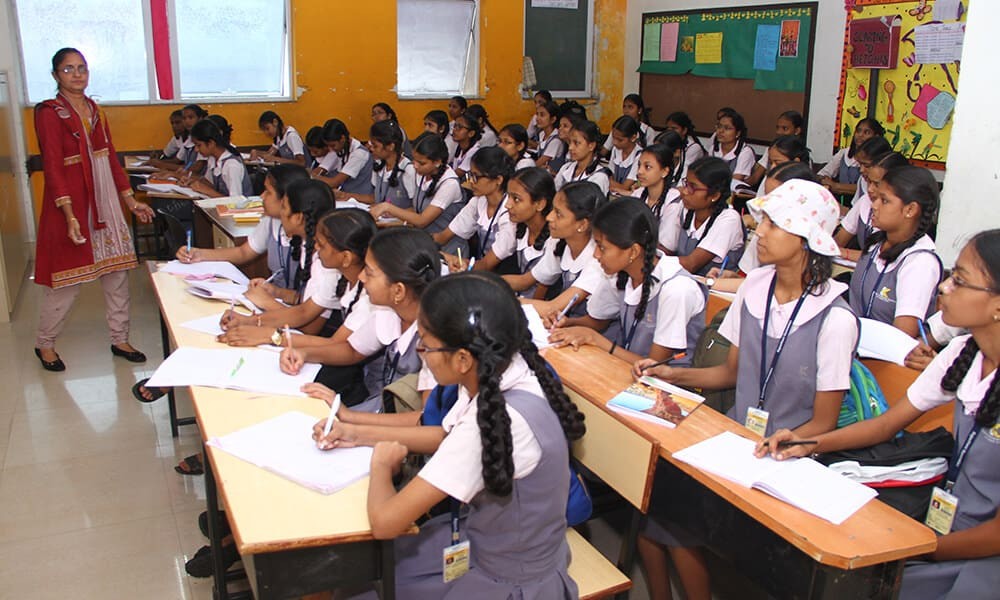
Choosing the right school for science is one of the most consequential decisions a family will make. Unlike primary education, where the primary focus remains foundational learning, the shift to senior secondary schooling particularly in the sciences sets the entire trajectory of a student’s career. For families navigating this decision in Gujarat’s commercial capital, the sheer number of secondary schools in Ahmedabad can feel overwhelming. This guide cuts through the noise and offers grounded, practical advice to help you make a choice your child will benefit from for years to come.
Whether your child aspires to become a doctor, engineer, data scientist, or researcher, the quality of their Class 11 and 12 science education will serve as the bedrock. With that in mind, knowing where to look, what to ask, and what to avoid makes all the difference. Parents exploring options among higher secondary schools in Ahmedabad must weigh curriculum rigour, faculty credentials, infrastructure, and long-term outcomes not just proximity or reputation.
1. Understand What the Science Stream Actually Demands
Before comparing schools, sit with your child and have an honest conversation about what studying science at the senior secondary level truly involves. This is not a continuation of Class 10 science. Physics, Chemistry, Mathematics, and Biology become deeply conceptual, calculation-heavy subjects demanding both analytical thinking and consistent revision habits.
Students who struggle with abstract reasoning or have inconsistent study habits often find themselves overwhelmed by the workload. A good school will have mechanisms remedial classes, doubt-clearing sessions, mentor teachers to support such students. Ask schools directly how they address students who fall behind, and what their average classroom size looks like. A ratio of more than 35 students per teacher in a science class is a red flag.
2. Curriculum Board: Why It Matters More Than You Think
The board of education is not merely an administrative classification it shapes everything from examination patterns to the kind of preparation your child receives for entrance exams. In Ahmedabad, you will broadly encounter schools affiliated with CBSE, ICSE, and the Gujarat Secondary and Higher Secondary Education Board (GSEB).
|
Factor |
CBSE Schools |
State Board |
ICSE Schools |
|---|---|---|---|
|
Curriculum Scope |
Nationally standardised, JEE/NEET aligned |
Region-specific, varies by state |
Broad, literature-heavy |
|
Science Stream Depth |
Strong Physics, Chemistry, Biology/Maths focus |
Moderate, competitive entrance prep limited |
Conceptual, less entrance-exam specific |
|
Lab Infrastructure |
Mandated by CBSE norms |
Varies widely |
Generally strong |
|
National Transferability |
Seamless across India |
Can be challenging |
Moderate |
|
Entrance Exam Alignment |
Highly aligned with JEE, NEET, NDA |
Partial alignment |
Good for CLAT, humanities |
|
Average Annual Fees (Ahmedabad) |
₹40,000 – ₹1,20,000 |
₹15,000 – ₹60,000 |
₹50,000 – ₹1,50,000 |
For students targeting national competitive exams such as JEE Main, JEE Advanced, or NEET, the CBSE school for science stream in Ahmedabad consistently remains the most sought-after option. The CBSE syllabus is specifically structured to align with the content and pattern of these entrance examinations, meaning students do not have to bridge a significant gap between their board preparation and their entrance exam coaching.
3. Evaluate Faculty Credentials Rigorously
The single biggest differentiator between an average school and an exceptional one is the quality of its science teachers. A degree on paper is necessary but not sufficient. Look for faculty who hold postgraduate qualifications in their subject, have experience teaching at the Class 11-12 level specifically, and stay updated with changes in examination patterns.
During school visits, you must visit in person to observe a class or speak with current students. Ask how often teachers are accessible beyond class hours. Enquire about faculty turnover; high turnover in science departments is often symptomatic of poor institutional culture or unrealistic teaching loads.
4. Inspect the Laboratories Not Just the Brochure
Science education without well-equipped laboratories is hollow. Practical exposure is not only valuable for understanding concepts it is assessed in board examinations and, increasingly, in entrance exams and university admissions. When visiting CBSE schools in Ahmedabad for 11 and 12, insist on being shown the Physics, Chemistry, and Biology labs in use, not just during a curated tour.
Look for functioning equipment rather than display pieces. Are the chemical reagents current and properly labelled? Is the biology lab equipped with microscopes in usable condition? Does the school follow a proper practical schedule, or are labs treated as a formality? These questions reveal far more about a school’s commitment to science education than any brochure ever will.
5. Consider the School’s Track Record, Not Just Rankings
School rankings published in newspapers or websites are often based on singular metrics board exam toppers, infrastructure scores, or fee structures none of which tell the full story. A more reliable gauge is the school’s track record in guiding students towards their goals over a sustained period.
Ask the school for data on the last three to five years: How many students appeared for JEE or NEET? How many cleared the qualifying cutoffs? How many secured seats are in reputed engineering or medical colleges? Also enquire about students who went into allied science fields research, actuarial science, environmental studies as this reflects the breadth of career guidance the school offers.
6. Assess the Integrated Coaching Ecosystem
Most students in science streams opt for coaching alongside school, particularly for JEE or NEET. Some schools have integrated coaching partnerships or run their own preparation programmes after hours. While this can reduce logistical strain on families, it is worth scrutinising the quality of such arrangements.
Overly rigorous integrated coaching programmes can be detrimental if they compromise a student’s sleep, mental health, or ability to understand concepts at their own pace. The best schools strike a balance: they prepare students for competitive examinations without treating every lesson as rote drilling for a test. Look for schools that speak openly about student wellbeing alongside academic targets.
7. Financial Transparency and Hidden Costs
Fee structures across Ahmedabad schools vary dramatically. Many families focus on tuition fees but overlook ancillary charges: laboratory fees, examination fees, study material costs, and compulsory coaching charges. Before committing, request a full annual cost breakdown in writing.
Additionally, enquire whether the school offers merit scholarships or financial assistance. Several reputed institutions provide meaningful fee concessions for academically strong students or those from economically disadvantaged backgrounds. This information is not always advertised and must be asked for directly.
8. The Student’s Voice Matters Most
Parents often drive the school selection process while students are passive observers. This is a mistake. A child who feels unheard in the decision-making process is more likely to feel alienated from the institution. Involve your child meaningfully: let them visit the school independently, speak to current students their age, and express their reservations freely.
Some students thrive in structured, high-pressure environments; others require more flexibility and individual attention. The right school is not the most prestigious one it is the one where your child is most likely to remain motivated, supported, and intellectually curious throughout those two pivotal years.
Conclusion
Selecting the right school for science is a decision that deserves at least as much attention as any other major family investment. For families in Gujarat exploring secondary schools in Ahmedabad, the options are plentiful but not all are equal. Similarly, parents seeking higher secondary schools in Ahmedabad must go beyond the surface appeal of brand names or proximity.
Whether you are drawn to a CBSE school for science stream in Ahmedabad for its alignment with national entrance exams, or simply need a comprehensive shortlist of CBSE schools in Ahmedabad for 11 and 12 that offer strong science faculty and laboratory facilities, the process demands diligence. Visit campuses, speak with teachers, talk to alumni, and trust your instincts but let them be informed instincts, sharpened by the right questions. Your child’s future in science begins with this choice.
——————————————————————————————————————