

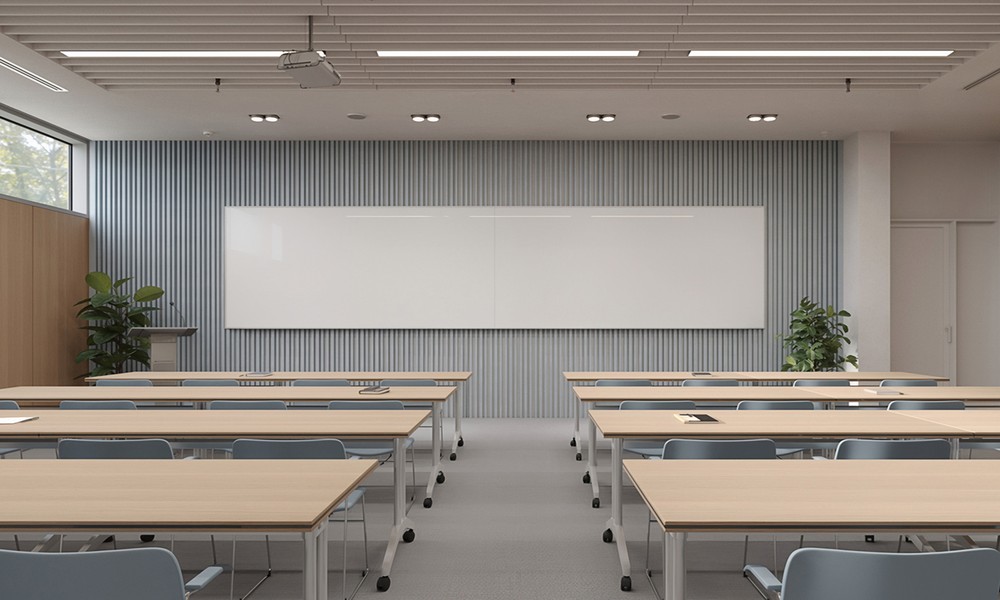
University lecture hall whiteboard specification combines the scale challenges of high-capacity instructional spaces with the durability and projection compatibility requirements of blended learning environments. The specification decisions made for a lecture hall whiteboard system affect instructional effectiveness for every section taught in that room for the next 20 to 30 years.
How Does Viewing Distance Determine Whiteboard Size in Lecture Halls?
Whiteboard visibility in lecture halls is determined by the ratio of writing surface height and contrast to the maximum viewing distance from the back row. Two sizing rules apply:
- Standard 4-foot-high boards are adequate for classrooms up to 35 feet in depth
- Lecture halls seating 100 or more students typically require 5-foot-high boards placed above the front-row sight line without obstructing back-row visibility
Architectural acousticians and AV consultants on lecture hall renovation projects routinely identify whiteboard placement and size as underspecified elements that reduce the effectiveness of AV system investments by creating sight-line conflicts that the AV specification assumed the architecture would resolve.
How Should Whiteboard Finish Be Coordinated With Lecture Hall Lighting?
Lecture hall lighting systems that support both whiteboard writing and projection viewing impose competing requirements on surface finish specification. Specifiers selecting whiteboards for universities for lecture halls should coordinate surface finish selection with the lighting designer and AV consultant before finalizing specifications.
Two lighting configurations impose different reflectivity requirements:
- Whiteboard-optimized mode: front illumination at angles that reduce glare requires a matte or low-gloss surface finish
- Projection-optimized mode: dimmed front fixtures create conditions where any surface hot spot becomes visible, requiring verified reflectivity data at reduced illumination levels
What Are the Structural Coordination Requirements for Sliding Board Systems?
Multi-panel sliding whiteboard systems in large lecture halls require ceiling-mounted track hardware that must be coordinated with 3 structural elements:
- Building structure above the ceiling plane to confirm load capacity for the track and panel weight
- Ceiling-mounted projectors and speakers that may conflict with the track path
- HVAC diffusers and sprinkler heads in the board zone that may require relocation
Sliding whiteboard track systems appear regularly in post-occupancy reports with alignment issues and conflicts with ceiling-mounted equipment. Early coordination during design development reduces but does not eliminate these issues.
Why Do Lecture Halls Require a Higher Surface Durability Standard?
Lecture hall whiteboards are used by more instructors per week than standard classroom boards, and the variety of marker types, cleaning chemicals, and usage habits they are exposed to is proportionally greater. 2 surface degradation patterns occur faster in lecture hall environments than in single-instructor classrooms: